

How to Prioritize When Everything Feels Important.

Starting a new semester can feel overwhelming. Between classes, assignments, extracurricular activities, and social obligations, it might seem like everything demands your immediate attention. If you struggle with executive function challenges, prioritizing can feel even more daunting. The good news? With the right strategies, you can take control of your to-do list and focus on what truly matters. Here’s how.
Start with a Brain Dump. When your mind is racing with tasks, it’s hard to focus. Begin by writing down everything you need to do. Don’t worry about order or importance yet—just get it all out of your head and onto paper or a digital note. This step clears mental clutter and gives you a clear picture of your workload.
Use the Time Management Matrix. The Time Management Matrix (also known as the Eisenhower Matrix) is a powerful tool originally used by President Eisenhower for categorizing tasks based on urgency and importance. Draw a box and divide it into four quadrants:
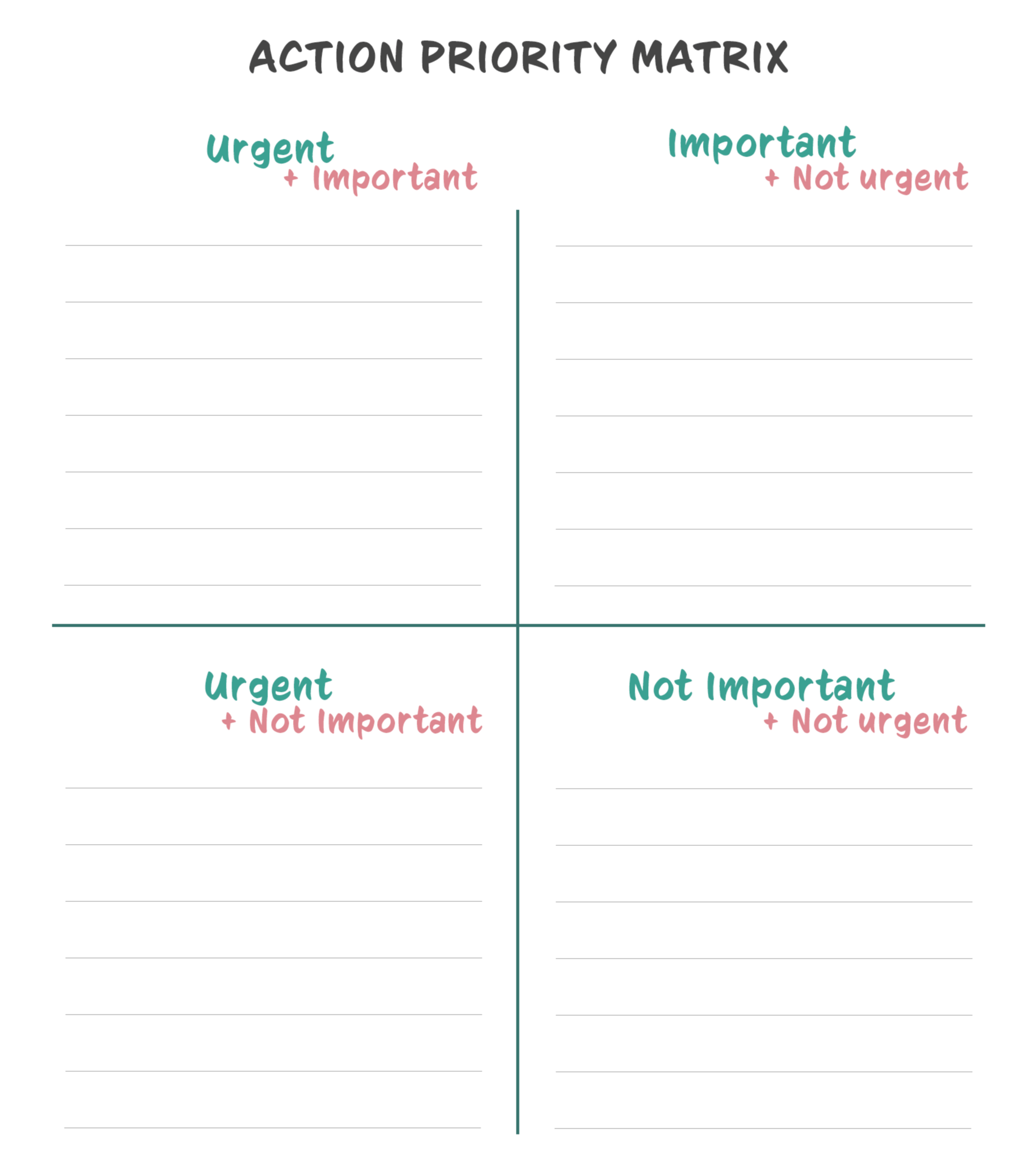
Put each task from your “brain dump” into a quadrant that fits based on these guidelines:
Urgent & Important: Tasks that need immediate attention and have significant consequences if not completed promptly. Examples include studying for tomorrow’s exam, submitting a blog post that’s due tonight at 10pm, or registering for courses by the deadline.
Important & Not Urgent: These are tasks that are important for long term success, but don’t necessarily have to be done immediately. While they aren’t pressing, they are still crucial. Examples of tasks in this category include working on a term paper due in a few weeks, or reviewing your notes on a regular basis.
Urgent & Not Important: Tasks that seem urgent but don’t contribute significantly to your goals. For example, responding to emails or texts from friends. These sometimes give a sense of urgency but resisting the urge to focus on them right away and responding when you have free time will allow you to complete your more important tasks.
Not Important & Not Urgent: These tasks are time-wasters and distractions and your goal is to minimize them as much as possible. Examples include binge watching tv shows, scrolling through social media and playing video games. Schedule time for these activities once your important tasks have been completed.
Once you’ve identified your most important tasks, you can create a to-do list and block time for your tasks in your calendar. Treat these time blocks like appointments—non-negotiable and distraction-free. Use digital tools like Google Calendar or physical planners to map out your day. Priorities can change, so take a few minutes each evening to review your progress and update your to-do list. Celebrate what you’ve accomplished and reassess what needs your attention the next day.
Learning to prioritize takes practice, but the payoff is worth it. By focusing on what truly matters, you’ll feel more in control and less overwhelmed. Remember, you don’t have to do it all at once—take it step by step, and give yourself grace as you navigate the new semester.
Start prioritizing today and set yourself up for a successful semester!
Think your student needs help with prioritizing and scheduling the many demands of college? Schedule a free consultation with our team to see if our research-based executive function coaching program is what your student needs to be successful in college.
Read about College Success Coaching, one-on-one virtual coaching that meets your student every week.