

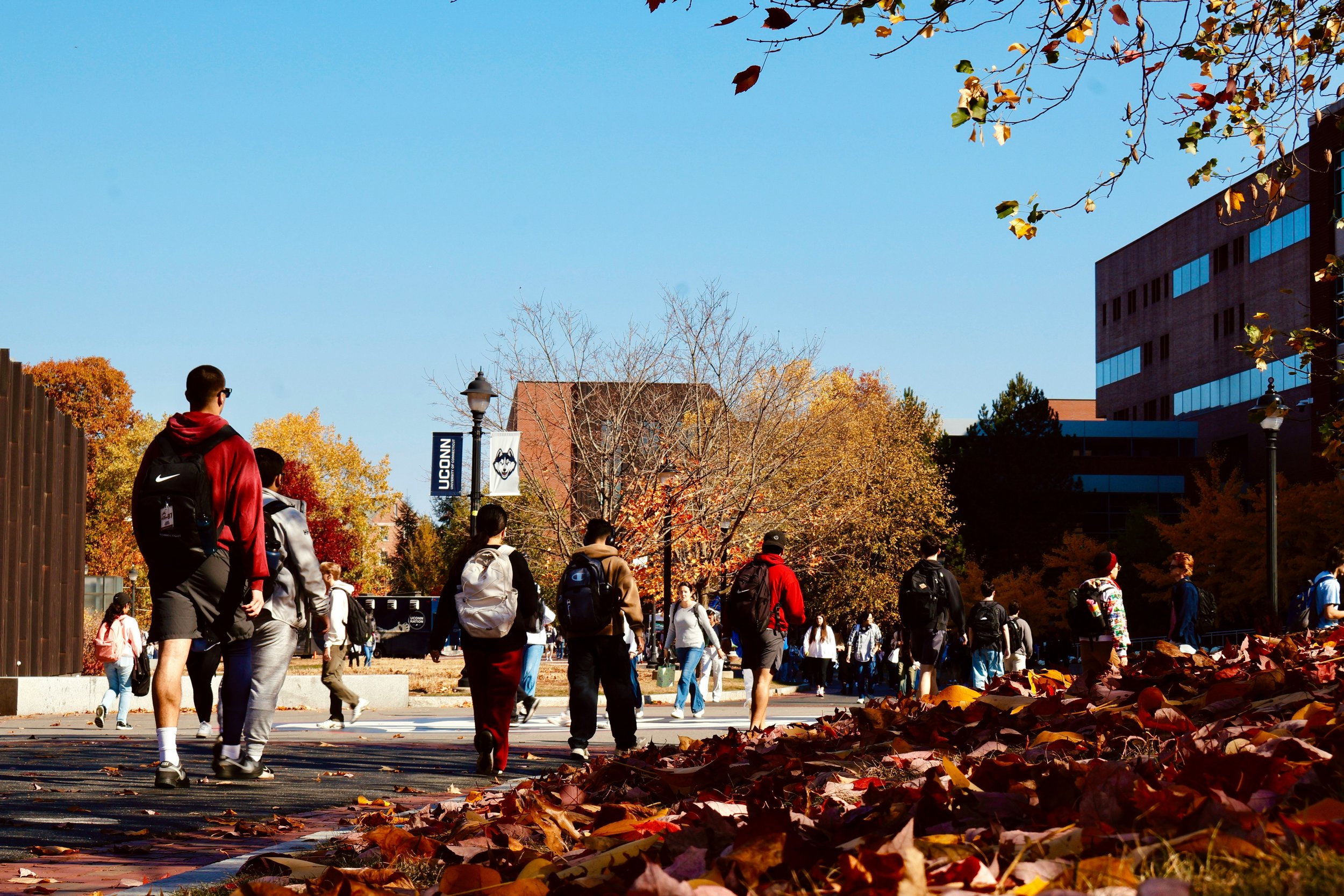
If your phone has rung a little more this week, a text that opens with "I'm so behind," you're not imagining a pattern. Stress among first-year students climbs steadily from the third week of the semester onward, tracking closely with the first wave of quizzes and papers landing right about now (a semester-long stress study of incoming freshmen).
Why does the overwhelm show up right about now?
Every fall, right around this point in the semester, something predictable happens. The excitement of move-in wears off, the first quizzes and papers land, and a lot of first-year students hit a wall at once. The same freshman stress study, published through the National Library of Medicine, tracked incoming students through an entire semester and found stress rising steadily across the term: a first peak around midterms, and the highest point of all right before finals, tracking closely with academic events rather than random bad luck (PMC). Late September, right as the first real wave of graded work lands, is exactly the window researchers would expect a jump. If your student is one of them, the most important thing to know is that a rough week right now is not a sign something is wrong with them. It is a predictable, well-documented moment in the semester.
Does a rough patch mean something is wrong?
Usually not. A review of first-year student stress research, published in the journal Social Sciences, found that more than 70% of students see their GPA drop relative to high school during that first year, a pattern researchers tie less to ability and more to the sudden loss of structure that used to come built in (MDPI). That structure has a name: executive function, the planning, prioritizing, and self-monitoring skills that let someone manage deadlines without being reminded. The Edge Foundation , which researches the high-school-to-college transition, puts it plainly: the supports that quietly carried a student through high school begin to disappear the moment they arrive on campus, and "the challenge is rarely a lack of ability. It's the need to manage dozens of executive function demands that were once shared with parents, teachers, and structured school routines." When your student says they're overwhelmed, they are usually describing a skill gap, not a crisis.
How can you tell normal adjustment from something more?
Most late-September overwhelm resolves on its own within a few weeks, once a student finds a rhythm. Researchers who study the first-year transition note that this kind of adjustment stress typically eases within the first few months of school (Watermark Insights). A few signs point to normal adjustment:
One deadline, not everything. They're stressed about a specific grade or assignment, not the whole semester at once.
Still showing up. They're going to class and turning things in, even if it's messy or late.
Bursts, not a decline. The overwhelm comes in a bad week rather than a steady slide.
They can name it. They can describe what's hard, even without a solution yet.
Pay closer attention if you're seeing the opposite: a pattern of skipped classes, missed assignments piling up with no plan to catch up, or a student who can no longer describe what's wrong, just that everything feels bad. For a longer gut-check, our executive function checklist for parents walks through the specific patterns worth watching for.
What can you do right now?
A few things make a real difference in this window, long before a rough patch becomes a bigger problem.
Listen before you problem-solve. Most students need to feel heard before they need a fix. Ask what's actually hardest right now before offering a planner or a schedule.
Help them name one next step, not ten. One concrete, doable next step, emailing the TA, blocking two hours Thursday, is more useful than a full overhaul. Our time management tips for college students is a good place to start if your student wants somewhere concrete to begin.
Resist doing it for them. The skill they're missing is the one they need to practice, not one you need to perform on their behalf.
Remember that normal does not mean unsupported. A student can be having a completely typical first-year moment and still benefit from someone helping them build the systems no one taught them.
Why This Ties to Executive Function
What your student is running into this month has a name: a gap in specific executive skills, mainly planning, time management, prioritization, and self-monitoring. High school offers built-in structure: bell schedules, teachers who track deadlines, and parents filling in the rest. College hands all of that over on day one, and most 18-year-olds have never had to run a full course load, a list of daily logistics, and a social life all at once before, because they have never had to. That gap is usually what pulls a parent back into the monitoring role this time of year.
How Coaching Helps
This is exactly the gap College Success Coaching is built for. A student learns to plan their own week, break down assignments, and manage deadlines with the same dedicated coach in their corner, so you don't have to stay in the monitoring role from three states away. It isn't a crisis intervention, just consistent, practical support while the skill is still new. Curious what that looks like week to week? Here is what happens in an executive function coaching session.
Read about College Success Coaching, one-on-one virtual coaching that meets your student every week. Schedule a free consultation to talk through what your student needs this semester.