

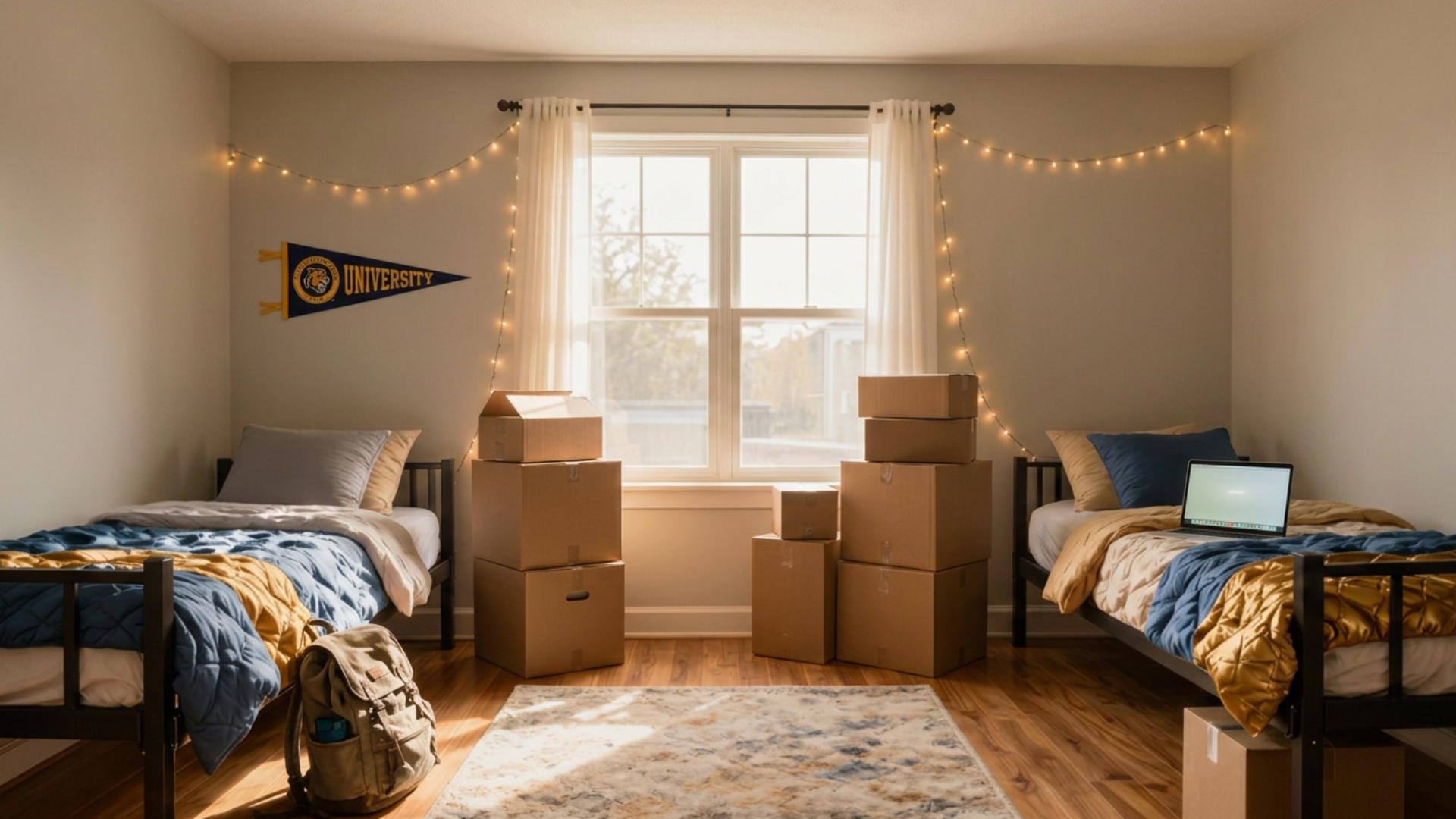
Housing assignments go out every summer, and every summer some students open the email disappointed — a roommate they didn't request, a dorm lower on their list, or a floor plan they hadn't hoped for. It's a small letdown in the scheme of a college career, but for a student already anxious about the transition, it can feel much bigger in the moment. How parents respond in this moment matters more than the assignment itself.
Validate the disappointment without amplifying it
It's normal to feel let down by a housing assignment, and dismissing that feeling ("it doesn't matter, you'll be fine") can come across as invalidating. At the same time, dwelling on the disappointment alongside your student can reinforce the idea that this is a bigger problem than it is. Acknowledge the feeling, then move the conversation toward what's next.
Reframe the roommate as an unknown, not a verdict
A roommate a student didn't choose isn't necessarily a bad roommate — it's simply an unknown. Many of the closest friendships in college start with randomly assigned roommates. Encourage your student to reach out before move-in with a simple, low-pressure message to start building familiarity before day one.
Remind them that most assignments can change
If the living situation genuinely isn't working after a fair trial period, most colleges have a room-change process. Knowing this option exists — without needing to use it — can lower the pressure your student feels to make a bad situation work no matter what.
Use it as practice for a skill they'll need often
College is full of situations that don't go as planned: a class that fills up, a group project partner who doesn't pull their weight, a club that isn't what it seemed. Learning to adjust expectations and problem-solve around a disappointing housing assignment is good practice for the flexibility that college consistently demands.
Why this ties to executive function
Adjusting to an unexpected outcome requires cognitive flexibility and self-regulation — the ability to manage disappointment without letting it derail focus or motivation. Students who practice this skill early in smaller moments are better equipped to handle bigger setbacks later in the semester.
How coaching helps
At College Success Plan, our coaches help students build the resilience and problem-solving skills to navigate the unexpected — whether it's a roommate situation, a tough class, or anything else that doesn't go according to plan. Schedule a free consultation to learn how coaching can support your student this fall.